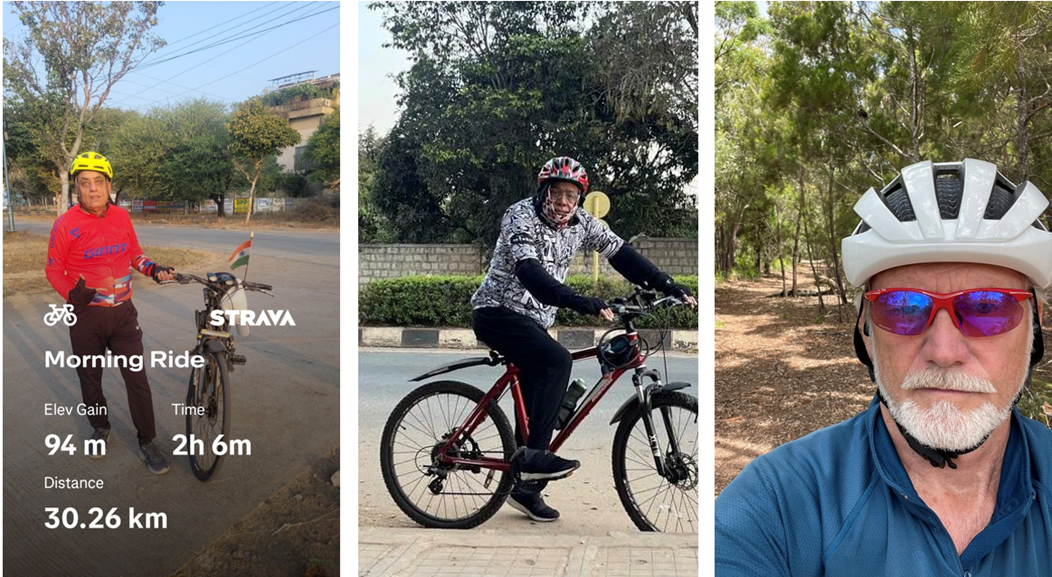
“It can be tailored to individual fitness levels and adjusted to accommodate different abilities and physical limitations, too,” said Mary. “Recumbent bikes, trikes, or electric-assist bicycles can be used to make cycling more accessible for those with mobility challenges or balance issues.”
Robert Patterson, a cyclist and lawyer, has been cycling for more than 40 years. He points out all the obvious aerobic and strength-building gains he’s enjoyed over the years, but also the psychological benefits.
“Cycling also benefits my mental health. My attitude and overall focus are always improved by being on the bike,” he says.
Benefits of cycling:
“Cycling is a low-impact aerobic exercise that helps improve cardiovascular fitness, strengthens the heart muscle, and enhances blood circulation. It can lower the risk of heart attacks, strokes, and high blood pressure, thereby promoting a healthy heart,” said Mary.
- Reduces risk of chronic diseases
“By incorporating a ride here and there into their routine, seniors can reduce the risk of chronic conditions. These conditions can be debilitating, but with regular exercise, seniors can take proactive steps toward prevention and management,” said Josh Weight, a certified sports physiotherapist and the director of Gravity Physio in Australia.
- Strengthens and protects joints
“Cycling is a low-impact activity that puts minimal stress on the joints, making it an excellent option for individuals with joint-related issues. It provides a cardiovascular workout without placing excessive strain on the knees, hips, or ankles,” Mary said.
- Develops muscular strength, endurance, and power
Age-related muscular decline accelerates as people age making it more challenging to continue doing everyday activities like climbing stairs or carrying groceries. It’s important to participate in exercises, like cycling, that will help maintain or build muscle mass over time to safeguard your ability to perform these daily activities.
- Enhances balance and coordination
“Cycling requires balance and coordination to stay upright and navigate,” says Andrew White, a personal trainer and owner of Garage Gym Pro. “This can be especially beneficial for seniors as these abilities tend to decline with age, increasing the risk of falls and injuries.”
- Makes it easier to manage weight
“Cycling can help seniors maintain a healthy body weight, reduce excess body fat, and prevent obesity-related health issues,” Mary said.
- Provides social opportunities and connection
Montefiore Randwick is part of Not For Profit organisation Cycling Without Age. TriCare’s Hastings Point Retirement Community’s cycling group is pictured below. There are a multitude of community cycling groups.