If you’ve been wondering whether retirement living could be the right next step, you’re not alone.
The latest 2024 Retirement Village Census by PwC and the Property Council (on behalf of the Retirement Living Council) shows that retirement villages continue to offer an affordable and supportive lifestyle option – and the appeal is growing.
Affordable living, even as prices climb
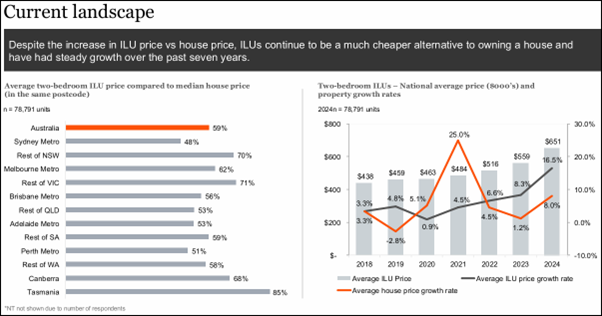
With property prices continuing to soar across Australia, retirement villages are proving to be one of the few bright spots when it comes to housing affordability. The average cost of a two-bedroom independent living unit (ILU) is just 59% of the median house price in the same suburb – slightly better than last year’s 57%.
But affordability varies from state to state. For example, in Tasmania, a two-bedroom ILU will cost you about 85% of the median house price, highlighting some regional differences.
Flexible options to suit your needs
Most retirement villages offer several contract types to suit different lifestyles and financial situations. The most common is the Deferred Management Fee (DMF) model, which bases the final payment on your original purchase price, and typically doesn’t include a share in any capital gains.
However, the sector is evolving:
53% of villages offer multiple contract types
30% offer upfront contracts
25% provide rental options
The average DMF across Australia sits at 33%, with slightly lower fees in Not For Profit villages. Monthly service fees have also remained relatively stable, rising just 4.7% over the past year. On average, Not For Profits charge $593/month, compared to $642/month for For Profit villages.
More than just a place to live
Today’s retirement villages are about more than just housing – they’re also delivering care and support to help residents live independently for longer. According to the Census, nearly 80% of villages now offer regulated home care services, either directly or through a partner provider.
“Retirement villages are no longer just bricks and mortar – they’re becoming the front line for aged care support,” said Daniel Gannon, Executive Director of the Retirement Living Council.
“As the average entry age into retirement living sits at 75 and the average resident age is now 81, these services are vital in helping older Australians stay safe, connected and supported in their communities.”
A call for action
As demand grows, the Retirement Living Council is urging all levels of government to reduce unnecessary red tape and enable more age-friendly communities to be developed.
“In the middle of a national housing crisis, retirement villages remain one of the few affordable and secure housing options for older Australians,” Mr Gannon said.
“And with more people choosing to age in place, we need a coordinated approach to make sure the sector can meet rising demand.”