Did you know that one in six Australians aged 65 and over has experienced some form of elder abuse in the past year? This shocking statistic comes from the latest study on elder abuse in Australia and reminds us how important it is to raise awareness and protect our older loved ones.
In 2023, the Retirement Village Residents Association (RVRA) conducted a survey called Ageing Without Fear, speaking to over 1,200 residents across 120 retirement villages in New South Wales.
The results were alarming: 40% of residents reported experiencing abuse. This abuse most often came from other residents or their families.
To address these serious concerns, the RVRA teamed up with the DCM Institute to hold webinars discussing the survey’s findings. They also met with the NSW Ageing & Disability Commission and the Property Council of Australia’s Retirement Living Council. Together, they released a Statement of Respect, which emphasises the shared commitment to creating safe and respectful environments in retirement villages.
Roger Pallant, Vice-President of the RVRA, said, “We are working closely with policymakers to strengthen protections for residents. We need clear guidelines and support systems to prevent and respond to elder abuse.”
Despite these efforts, elder abuse remains a significant issue in NSW and beyond. A recent report by Relationships Australia NSW highlights that psychological and financial abuse are the most common types. Sadly, over half of the alleged abusers are the victims’ own children. Ageism in society also means many cases go unreported.
“Ending elder abuse is a long journey,” said Roger Pallant. “It will take ongoing teamwork between residents, village managers, policymakers, and advocacy groups. Building on the Ageing Without Fear report and the awareness raised by World Elder Abuse Awareness Day, we hope for a future where all older Australians can live free from fear and with the respect they deserve.”
What is Elder Abuse?
Elder abuse is any harmful act done to an older person by someone they trust. This could be a son, daughter, spouse, grandchild, or caregiver.
Abuse can take many forms, including financial, emotional, psychological, physical, sexual, or social. It might happen once or repeatedly, and range from subtle actions to severe harm. Often, elder abuse happens behind closed doors and goes unnoticed.
Thankfully, village operators, police, and community organisations are working together to raise awareness. By learning to recognise the signs, communities can better protect older people.
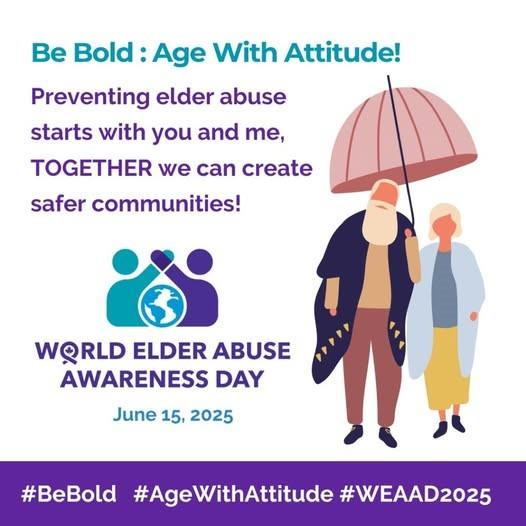
Mark your calendar: World Elder Abuse Awareness Day 2025
This year, World Elder Abuse Awareness Day (WEAAD) is on Sunday, 15 June. Across Australia, events are being held to highlight this important cause. Check with your local council to see what’s happening near you.
Jeff Smith, NSW Ageing and Disability Commissioner, said, “The Ageing & Disability Commission proudly supports WEAAD. We are committed to protecting older people’s rights to live free from abuse, neglect, and exploitation in their homes, families, and communities.”
He encourages everyone to get involved and raise awareness. To help, the Commission has developed a communications toolkit which you can access here.
Need help or advice?
If you or someone you know may be experiencing elder abuse, help is available. Call 1800 ELDERHelp (1800 353 374) – a free, confidential helpline that connects you to support services in your state or territory.
Together, by staying informed and speaking up, we can make sure our elders live with the dignity, safety, and respect they deserve.