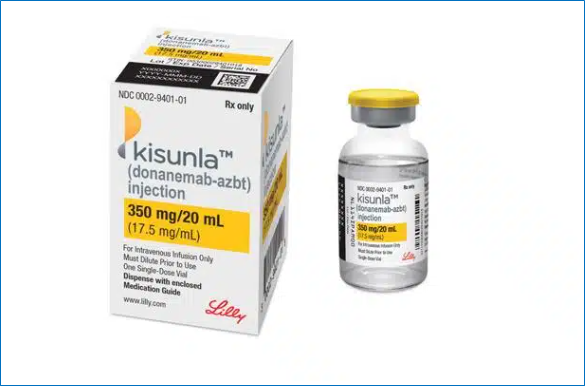
A new treatment that could slow the progression of early Alzheimer’s disease has been approved for use in Australia. The Therapeutic Goods Administration (TGA) has given the green light to Donanemab, a medication already approved in several countries including the United States, where it’s marketed as Kisunla.
The approval follows a major clinical trial published in 2023 involving 1,736 participants. The study showed Donanemab significantly slowed disease progression in people with either early-stage Alzheimer’s or mild cognitive impairment linked to Alzheimer’s.
How does Donanemab work?
Alzheimer’s is the most common cause of dementia, accounting for around 70% of cases. It’s believed to be caused by the build-up of two abnormal proteins in the brain: amyloid and tau.
Donanemab is a monoclonal antibody that targets amyloid. By binding to amyloid plaques in the brain, it helps the body clear them out. The treatment is delivered via monthly intravenous infusions.
Who can access the drug?
Not everyone with Alzheimer’s will be eligible. Under the TGA’s approval, patients must first undergo testing to confirm high levels of amyloid in the brain – either through a PET scan or lumbar puncture.
Additionally, people with two copies of the ApoE4 gene, who are at increased risk of side effects, are excluded. This group makes up about 2% of the general population, but 15% of people with Alzheimer’s.
The cost challenge
The major hurdle for many patients is the cost, which is estimated between $40,000 and $80,000 per year. This does not include the additional medical expenses related to scans and doctor visits needed to monitor treatment.
Pharmaceutical company Eli Lilly has applied to have Donanemab listed on Australia’s Pharmaceutical Benefits Scheme (PBS). If approved, the drug would become much more affordable – but at a high cost to the public purse. A decision on this is expected within the next few months.
Not a cure – but a step forward
Experts are quick to stress that Donanemab is not a cure. It can slow down the disease in its early stages, but it won’t reverse damage or stop Alzheimer’s altogether.
With over 400,000 Australians currently living with dementia, and only 13% receiving a diagnosis within a year of symptoms, there are calls for better access to early diagnostic services. That’s because treatments like Donanemab work best early – long before symptoms become severe.
This approval marks a promising development in the fight against Alzheimer’s. But with access, cost, and early diagnosis still significant hurdles, there’s more work ahead to make new treatments truly impactful.