
Australians are living longer, healthier lives. In the last 100 years, the life expectancy of Australians has increased by 20 years.
Australians are living longer, healthier lives. In the last 100 years, the life expectancy of Australians has increased by 20 years.
Now Australia has 3700 people aged over 100. By 2050, Australia will have over 50,000 people aged 100 and over. For seniors, this means more years of being active and being a valuable part of the community, states the Australian Government’s Treasury Department.
If people are living longer, they need to be healthy.
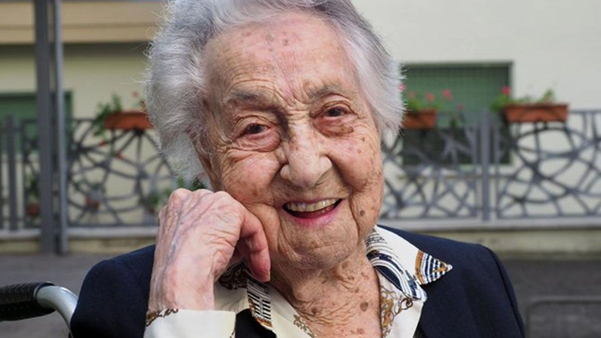
Associate Professor Salvador Macip Maresma, University of Leicester, England, who researches the molecular aspects of ageing, was part of a large cohort of Spanish scientists involved in studying Maria Branyas Morera (main photo), the world’s oldest person until she died in August 2024, aged 117.
“We jumped at the opportunity to study the oldest person alive,” Maresma said. “When the researchers first met Maria she was 116 years old and she was very generous with her time and samples for us.”
The scientists analysed Maria’s blood, saliva, urine and stools, lifestyle and mindset for a study published in Cell Reports Medicine.
Maria was clearly a winner in the genetic lottery – many gene variants have been associated with protection against common diseases from dementia and heart disease to cancer.
“Most of these people age in a different way to the rest of us,” Maresma said. “In general ageing is more linear, meaning we progressively decline, but super-centenarians are very well for a very long time and then suddenly decline, so they are in fact very active until very late on.”
The length and athletic life of Emma Maria Mazzenga, a 92-year-old from Padua in Italy, who holds four world records at sprinting for women in their nineties, is the subject of another in-depth study, the results of which are about to be published by a team from Italy and the University of Wisconsin’s department of geriatrics and gerontology.
Measurements have revealed that Mazzenga’s lifelong exercise regimen has left her with the cardiorespiratory fitness of someone in their fifties and with the muscle health of a 20-year-old.
“She displays a high proportion of fast-twitch fibres, important for speed, and remarkably large and well-vascularised slow-twitch fibres, important for endurance, which is rare in someone in their tenth decade of life,” Assistant Professor Christopher Sundberg, lead researcher at Wisconsin, said.
Detailed analysis of her mitochondria, the “powerhouses” of muscle cells that produce the energy needed for movement and to delay fatigue, revealed them to be “exceptionally” well maintained.
“Preserving mitochondrial health is crucial since it supports energy production, mobility and resilience, all of which contribute to healthier ageing,” Sundberg said.
“The findings support recent research showing that mitochondrial oxidative capacity is highly sensitive to inactivity but can be largely maintained with regular physical activity.”
Scientists believe these insights are helping to unravel the mystery of longevity.
“To get to 117 you do need good genes, there’s no debating that,” Maresma said.
“But to reach age 90 or 100 in good condition might be more of a balance of genes and things you do in everyday life to stay healthy.”
10 tips to stay healthy as you age
Throw away the supplements
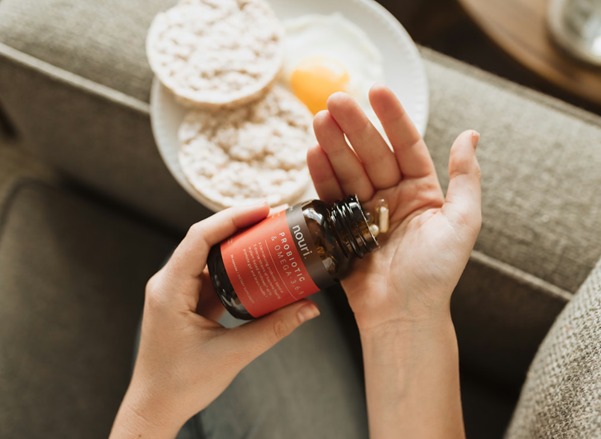
From injectables such as NAD+, an energy-generating coenzyme that when naturally present in the body encourages our cells to repair themselves, to supplements of Urolithin A, produced by gut bacteria and believed to improve the health of cells, there is no end to pills promising a longer life.
“We don’t have any proof that anti-ageing supplements work at all,” Maresma says.
“A lot of the things that are being sold as supplements are based on scientific data but only on animals and we just don’t know the dose or the impact in humans.”
None of the super-agers scientists studied reached a healthy old age on a cocktail of longevity pills.
Exercise regularly
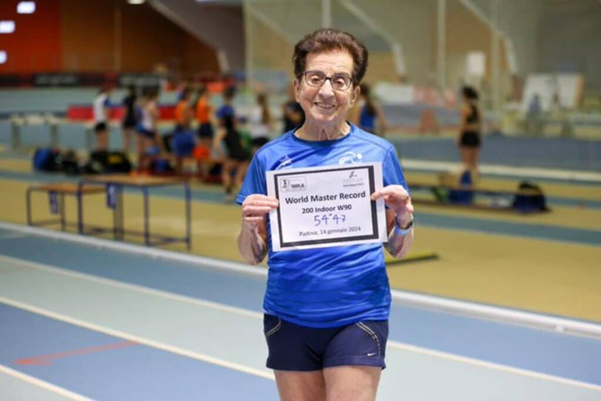
Mazzenga (pictured) started running at 19, stopped in her twenties when she started a family and didn’t run again until her early fifties.
Not that she has ever been inactive. Crucially she says she rarely spent a day indoors. She now runs up to three times a week and goes for a walk on her off days.
It is consistency of activity over the years that the Wisconsin researchers believe has helped her to age so well. Small amounts of exercise done regularly will pay off.
Inevitably at 92 she has some normal age-related muscle loss but under examination her “slow-twitch” muscle fibres – the type associated with endurance and the blood flow and nerve pathways to her muscles – “were indistinguishable from a healthy 20-year-old female”.
Sundberg said the message is clear. “Regular exercise throughout life can absolutely drive positive changes in muscle health and performance.”
Eat yoghurt daily (and tend to your microbiome)

Yoghurt was on 117-year-old Morera’s daily menu and researchers think it probably helped her microbiome to flourish and fight off disease.
“In terms of habits, this lady was eating three yoghurts a day,” Maresma said.
Yoghurt alone won’t extend your life, it is a food that people should consider adding for its overall health benefits. It’s a good source of iodine, vitamins D, B2 and B12 and zinc, as well as protein and calcium, but also provides beneficial bacteria usually in the form of typically Lactobacillus bulgaricus and Streptococcus thermophilus that helps to maintain gut health.
Previously scientists studying more than 150,000 people had shown there were lower levels of some types of colorectal cancer among those who ate two or more servings of yoghurt a week as they grew older.
Do a variety of exercises
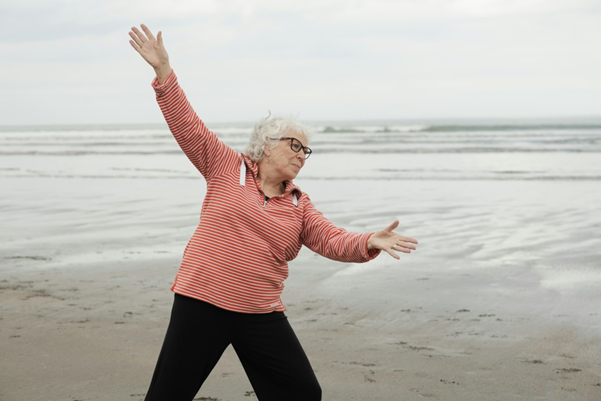
Staying active in any form helps prevent diseases and both prolongs and improves the quality of our lives as we age.
Anything is better than nothing but the more one mixes things up on a weekly basis, the better the prognosis.
“The best approach is likely combining aerobic exercise with strength and sprint or power training to help benefit muscle, the cardiovascular system and overall functional ability,” Marta Colosio, an exercise physiologist, said.
“Resistance training is essential for preserving strength and muscle mass, aerobic training supports heart and metabolic health, and some higher-intensity or speed-based work, when appropriate and safely progressed, can help maintain power and mobility.”
Try and do balance training most days
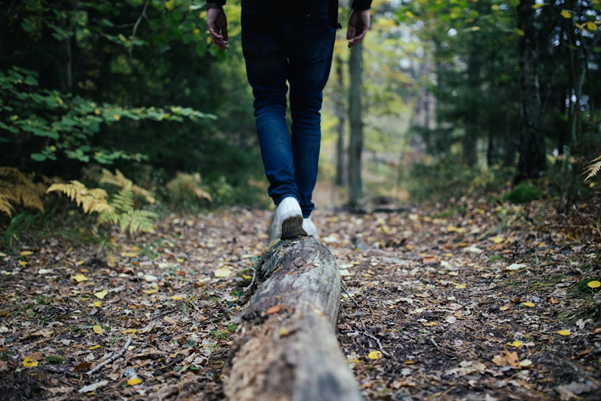
Muscles are not the only thing we lose as we age. Balance, that we take for granted, begins to go awry.
Falls are one of the greatest risks to independence in older adults and balance training is just as important as strength and aerobic training when it comes to maintaining your health
Even octogenarians (and older) who train for competitive sport need to work on balance exercises according to researchers at Manchester Metropolitan University, who found general fitness didn’t stem a decline in balance. It can be something as simple as standing on one leg with eyes closed as you brush your teeth.
Communication: keep in touch with friends (and make new ones)

Humans thrive on social interaction and Maresma says a key aspect of healthy ageing that is often overlooked is maintaining a good social circle, mixing with people of different ages.
“There is a proven biological effect as we see older people without a strong social network go downhill very quickly,” he said.
“One of the super-centenarian women I interviewed in Costa Rica told me she was surrounded by young children as a babysitter for her village and that is what kept her mentally and physically active.”
Psychologists reporting in Epidemiology and Psychiatric Sciences journal confirmed that from midlife onwards adults with strong social networks were 24% less likely to die prematurely during an eight-year study.
Ensure you have sufficient Vitamin D
Vitamin D helps your body absorb calcium from the food you eat. This is vital for bone development and strength. It also helps control the amount of calcium in your blood.
Vitamin D is also important for the health of your:
- Immune System;
- Skin;
- Muscles; and
A lack of vitamin D can increase your risk of certain conditions, such as:
- Osteoporosis;
- Cancer;
- type 2 diabetes;
- high blood pressure; and
- infectious diseases, including severe infection with COVID-19.
Most people are unable to get enough vitamin D from food alone. In Australia, most people can get enough vitamin D with careful sun exposure.
Amazingly, the Australian Bureau of Statistics estimates that just under one in four Australian adults have vitamin D deficiency.
Some studies, including one in the American Journal of Clinical Nutrition, suggest that vitamin D could prove a “promising strategy” for countering biological ageing by preserving the length of telomeres, the DNA caps at the ends of chromosomes that protect against cell death.
Always try to walk more each day
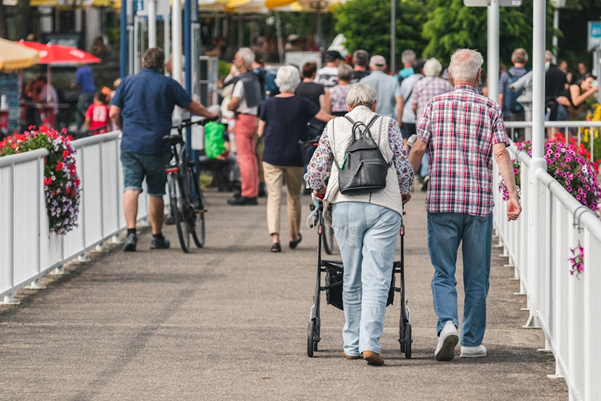
Walking has a powerful impact on ageing and Maresma said most of the super-agers he has encountered clocked up considerable daily steps. Doing so has been shown to amplify blood flow to the brain, with some studies demonstrating that 20 minutes of walking most days from middle age onwards is enough to boost fitness to a level that will lower the risk of dementia.
There’s even evidence of a direct link between walking briskly – at a rate of 100 steps per minute or faster – and slower biological ageing.
Thomas Yates, a professor in physical activity, sedentary behaviour and health at the University of Leicester, England, found that participants in his studies who were faster walkers had a biological age 15 years younger than those who tend to dawdle. Sundberg makes sure he gets his steps in every day. “Life in academia is mostly sedentary, so we make a conscious effort to use our free time to train, move and keep our bodies strong,” he said. “The goal is to build habits now that will allow us to stay active, healthy and independent well into our later decades.”
Enjoy three to four cups of coffee daily
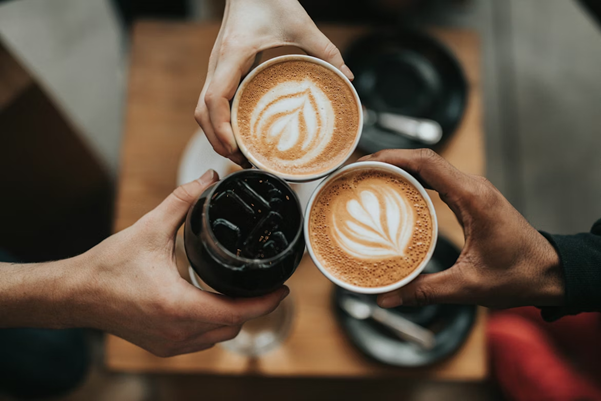
Coffee is packed with hundreds of plant components and antioxidants that are beneficial for gut, brain and overall health.
Scientists from King’s College London, England, were among those who found coffee to have the greatest benefits on the microbiome, important in itself and key for healthy ageing, of 150 food and drinks tested.
A University of Southampton, England, study found that three or four cups of coffee a day could significantly reduce the chance of an early death. Maresma said anecdotal evidence is encouraging:
“A centenarian in Spain who died a few weeks ago at 108 told me she was drinking a lot of coffee,” he said.
Red wine is not going to help you age well and no alcohol is best action

Red wine contains resveratrol, a compound found in grape skins that has antioxidant and anti-inflammatory effects linked to heart health and anti-ageing in lab studies.
However, human research shows inconsistent results. A review at the University of Victoria in Canada revealed that many studies have created “misleading positive health associations” for red wine and alcohol. Compared with no alcohol, even moderate intakes have now been shown to have no significant benefits for longevity.
“The [ideal] recommendation would be to have no alcohol – much like smoking, it is never good for us,” said Maresma. “The potential benefits of red wine are balanced out by the toxic effects of the alcohol itself. It doesn’t work, unfortunately.”
If you want to increase your intake of resveratrol, get it from dark berries, apples, pistachios, peanuts and a few squares of dark chocolate instead.